Wednesday, February 17, 2021

Pandemic Picks from January 2021

Oops. My May 2020 resolution to send out a monthly Tiny Letter didn't really stick. That's one less email clogging up your boxes, I suppose. But I was back! in January, with lots of movie related thoughts.

---

In 2021, I’m reclaiming my love of going to the movies. So what if every cinema I loved in this city is dead or in mortal peril? I’m stuck at Cinema du Living Room and I know I’m happier when it’s screening more than Star Trek re-runs seven days a week. Time to start programming the hell out of this place. 
 
I finally gave in to the hype and watched Mank, David Fincher’s period drama about Herman J. Mankiewicz and how he came to write the screenplay for Citizen Kane. I didn’t hate Mank like I expected, which is something. But… I wasn’t exactly blown away. So, instead of telling you to watch Mank, I have a couple more worthy recommendations.
 
First, an actual Orson Welles movie: 1946’s criminally underhyped noir, The Stranger. Welles directed, and he and his mustache play Franz Kindler, a former Nazi hiding out in a small town bastion of Connecticut bluebloods. A war crimes investigator, Edward G. Robinson, is hot on Kindler's trail. Will he be able to get the evidence to nab the monster?
 
While The Stranger isn’t a masterpiece (and deserves its B movie status), it’s more than worth your time. The cinematography ranges from good to the shadowy sublime. Edward G. Robinson  is wonderfully understated, playing against type. Short, chubby, with the “face of a depraved angel,” Robinson serves up exactly the kind of cinematic comfort food I’m craving. (As the kids say, we stan a short king.) Almost a year into the never-ending staycation, I realize I need more than a giant plushy. I need a gruff but gruff teddy bear, someone in the cuddly zone between Edward G. Robinson and Simon Oakland.
 
And if you’ll allow me to be serious for a moment, The Stranger is a great movie to screen for International Holocaust Remembrance Day (January 27, commemorating the liberation of Auschwitz-Birkenau by the Red Army.) According to its Wikipedia entry, “The Stranger was the first commercial film to use documentary footage from the Nazi concentration camps.” The bits of documentary film reels seen in the movie were used as evidence at the Nuremberg trials. Welles had seen the film in the course of his participation in the United Nations Conference on International Organization, a post-war meeting of allied nations in late spring 1945. Welles was clearly deeply affected by what he saw at the Conference. The Stranger’s plot reads as both metaphor for the urgent task of de-Nazification, as well as the difficulty of convincing the world to care about Nazi crimes.
 
I imagine playing a Nazi hunter was a meaningful role for Edward G. Robinson (b. Bucharest, 1893). His brother was gravely injured by an antisemitic mob in Bucharest, after which his family emigrated to America. The Stranger deals frankly with the destruction of European Jewry, at a time when the scale of the Nazi’s crime was still not entirely accepted. 
 
My next film recommendation is a bit further afield. If you’re missing the experience of live theater, allow me to point you to Netflix and the superb new adaptation of August Wilson’s Ma Rainey’s Black Bottom. It tells the story of real-life blues pioneer Gertrude ‘Ma’ Rainey. She and her band have left their tour of the American south for a one-day Chicago recording session with a white recording studio. Even the blues was a just another commodity to be exploited and transformed by its encounter with white supremacy. August Wilson’s genius was to imagine what it felt like for the people caught up in that encounter, and he had two Pulitzer Prizes to prove it. 
 
This latest adaptation is brilliant, avoiding stage to screen pitfalls. Wilson’s words sing, brought to life by a stellar ensemble, including the final film performance from Chadwick Boseman. Ma Rainey isn't exactly a light evening’s entertainment, but it's eminently worth your time.
 
I must also mention the passing of a quiet legend at the beginning of this new year, Crossing Delancey director Joan Micklin Silver, koved ir ondenk. Though Hollywood had almost no interest in her unique vision, Micklin Silver still managed to leave an impressive body of work, produced mostly from the margins. Of greatest interest to Yiddishists is Hester Street, her adaptation of Ab. Cahan’s Yekl, starring a luminous 21 year old Carol Kane as the rejected greenhorn wife, Gitl. 
 
Micklin Silver excelled at literary adaptations and she had an eye for material in which women could shine. Take her 1976 short film based on an F. Scott Fitzgerald story, Bernice Bobs Her Hair. It’s a delicious slow burn, in which a mousy young woman is Pygmalioned by her fickle cousin. If you can relax into the film’s easy pace and lo-fi aesthetic, you’ll be rewarded by a shocker of a climax that had me gasping out loud, and an ending that will make you cheer. With excellent performances by Shelly Duvall and Veronica Cartwright, it’s available on Youtube and you should watch it now.


Pandemic Picks from May 2020

Starting last spring, I decided I would get more disciplined about sending out Tiny Letters on a regular basis. That didn't happen, but the letters I did send out have a lot of movie-related content. Since I know most people reading here aren't subscribers, I thought I'd share here, too.

The May 2020 letter featured a bunch of streaming picks:

The Outrageous Sophie Tucker: I honestly didn’t know that much about Sophie Tucker before I wrote about her for the Mothers Day edition of my column.  So when I saw that there was a fairly new documentary about her, I clicked immediately. Though Sophie built her career on (presumably) heterosexual innuendo, one of the revelations of the movie was her lifelong romantic relationships with women. Alongside her unconventional lovelife, her defense of African-American showbiz colleagues, and her flagrant Jewishness, was her close friendship with J. Edgar Hoover. Sophie lived a life full of verve, and contradictions. All hail the red hot Yidishe mama.
 
Miles Davis: Birth of the Cool (PBS or Netflix) An absolutely riveting story of an American icon. Even if you don’t listen to jazz, you will learn something about American history, and music.   
 
Rush: Beyond the Lighted Stage Again, you don’t need to be a fan to enjoy the documentary, this one about the Canadian rock band Rush. The movie explores a different kind of rock and roll story- three young guys who made it big with their band while holding on to their families and their health. Rush’s success was always a fan phenomenon. Critics generally looked down their noses at the band. Existing between categories, the band fearlessly grew their musical vision and it makes for a fascinating story about the nature of artistic growth. 
 
AKA Doc Pomus: How a Jewish boy named Jerome Felder became the internationally beloved songwriter Doc Pomus, writer of Viva Las Vegas, Lonely Avenue, This Magic Moment and a million other hits. There’s so much to love about this documentary, but one thing makes it feel particularly timely. Felder contracted polio as a child and was disabled for the rest of his life. Living in a disabled body colored the way he moved through the world and shaped his lyrics, consequently shaping American pop music. I promise you'll hear these songs in a whole new way.
 
The Green Girl  Susan Oliver appeared on a million TV shows over the decades. But perhaps her most famous role was as the ‘Green Girl’ in the credits to the original Star Trek. But there was much more to Oliver than her career as the consummate Hollywood day player. Among other things, she was an accomplished amateur aviator. The Green Girl is a terrific, and heartbreaking, story about sexism in Hollywood and how talented women dealt with its frustrations. 

Streets of Fire

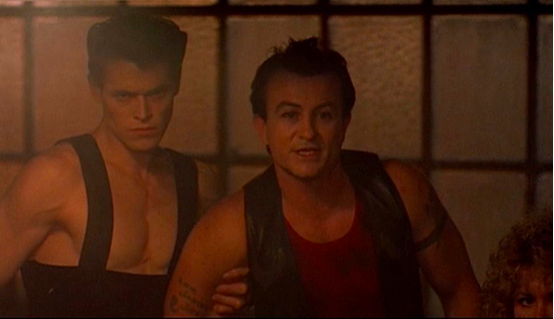
Have you seen The Warriors (1979)? I consider it one of the finest American films of the last fifty years, and not just because director Walter Hill had the audacity to make a movie about New York gangs and dressed them like this.


Anyway, this isn’t about that. Sorry.
 

After The Warriors, Walter Hill had an odd career trajectory, with huge hits like 48 Hours (1982), and daring flops, like Streets of Fire (1984). You can see flashes of The Warriors in Streets of Fire: the heroes fight to make it across a city, there’s an epic gang battle, and the camera lovingly returns to lonely train station after lonely train station. But none of it can possibly add up to the gripping sweep of The Warriors


In 2017, after decades lingering forgotten on the outskirts of pop culture, Shout Factory reissued Streets of Fire on Blu-Ray. The film is now undergoing a bit of a reconsideration, quietly going from neglected flop to cult classic, especially among viewers who weren’t even alive in the 1980s. If you check Twitter, it seems someone is always discovering and subsequently flipping their wig over its many virtues: the bangin’ soundtrack, Ry Cooder score, Hill’s odd fixation on suspenders, and the amazing cast, including an extremely young and hot Willem Dafoe. What’s not to love?


LOL what the fuck?


Well, it turns out, a lot. What’s so fascinating, and ultimately disappointing, about Streets of Fire, is that despite the insane amount of talent both behind and in front of the camera, it’s painfully clear what made the movie flop in the first place. The script simply stinks. The dialogue sounds like a first draft and the characters are forced to say witless, obvious things, over and over. The inane dialogue is in stark contrast to the movie’s gorgeously rendered visuals. Streets of Fire immerses you in its darkly sexy, gritty world, where even the puddles are full of sex and neon. I understand why so many want to claim the film for a neglected masterpiece. If only the human beings in it had more depth than the puddles!   


Sure, the movie is supposed to be stylized. I can get down with stylized. But there’s stylized and then there’s just undercooked. If you only watched the first few minutes, though, you’d have a very different impression of the film. The opening is a killer; a breathless set piece which drops us right into the movie’s brilliantly conceived nether-world, amping up the excitement with a nightclub number and introducing us to the story's beautiful damsel in distress, Ellen Aim (Diane Lane). But where The Warriors told a story almost without words, seamlessly melding action and immersive visuals, Streets of Fire is weighed down by its dreadful script, punctuated by exciting musical moments. I’m sure that at the time, Streets of Fire was dismissed as a symptom of the MTV-ification of the movies. 


I was alive during the '80s. I remember well the panic about music videos and what destruction they were wreaking on our culture. There was moral panic (over, of all things, a Duran Duran video FFS) as well as aesthetic panic. We were warned that fast paced ‘MTV style’ cutting was going to be the death of all things right and good with cinema, as if Sergei Eisenstein himself hadn’t died for all our sins right there on the rapid-cut Odessa Steps sixty years earlier. But, really. C’mon. Rapid cutting can be good! Music videos can be good! The problem is not the pernicious influence of music videos. And not every music-video inspired movie need be as bad as something like Flashdance (which, curiously, like Streets of Fire, also feaures Lee Ving in a supporting role…anyway…). If Walter Hill had wanted to make long form music videos, then he should have had the courage of his convictions and just done that. It worked for Jon Landis and Thriller! Streets of Fire would work a lot better if you think of it as a bunch of spectacular, high production value music videos, vaguely connected by a cartoonish storyline.   


The script isn’t the only problem with Streets of Fire. Walter Hill made the fatal mistake of hanging the movie on Michael Pare, who plays Tom, the roguish anti-hero called home to rescue his ex-girlfriend. Standing still, Pare looks like a GQ model. In motion, he’s got all the sizzle of wet firewood. His lack of screen appeal is all the more apparent because he’s up against Willem Dafoe, playing the villainous gang leader who kidnaps Ellen. It’s Dafoe’s first real starring role and he’s magnetic. You see him and think, yupthat’s what a movie star looks like You see Michael Pare and you think, yup, that’s what a sub-par hunk looks like, the type Menachem Golan might pick up in the duty-free on his way home from Cannes if they’re all out of Dudikoff.  Pare never exhibits the slightest bit of humor or self-awareness, a pre-requisite for any good anti-hero. Pretty much everyone in the movie is dour and unnecessarily mean.


Perhaps most unforgivably, Hill cast Rick Moranis as Billy Fish, Ellen Aim’s obnoxious manager-cum-boyfriend. Just as Moranis was sliding into his golden era of comic triumphs in the 1980s, Hill handed him this absolute turd of a role, though he does his best with the material at hand. I dare say, a less talented, and less lucky, performer would have had his career utterly derailed by such an unfortunate turn. 


In a film where most of the dialogue is clunky and the characters are underwritten, Billy Fish is the clunkiest and flattest. Was it a coincidence that the one Jewish-coded character in the movie is a greedy little shit who can’t stop talking about money? He’s constantly berated for being short, which gets really tired after about the tenth time. Hill might as well have placed a Kick Me sign on him and called it a day for character development. 


Hill came so close to stumbling onto what would’ve been a brilliant casting choice. No director or writer has yet spotted the untapped potential in casting Moranis in a really juicy bad-guy role. If you go all the way back to SCTV, you see the range of his personas, far beyond the cliche nerds, and Moranis can rage hard like nobody else. 


Larry Siegel is just one of my favorites.


Having Moranis play a psychopathic gang leader would’ve been utterly unexpected, and absolutely delicious. I still hold out hope that in one of the endless pieces of licensed Marvel garbage now keeping the movie industry afloat, someone somewhere will understand this and convince Moranis to make a big comeback as a Marvel villain. I'm asking you, Where is the villainous short king we deserve???? 


Of course people are obsessed

Willem Dafoe has said that playing the Green Goblin in the Sam Raimi Spider-Man movies was one of his all-time favorite roles. It was both a critical and fan favorite and even I, a person who hates comic book movies, I have to agree that it was a very good thing. I will (happily) eat my comic book hating hat if it’s Marvel which ends up finally giving us the nerd-to-America's dad-to-anti-hero character arc for which we've already waited too damn long.   

Sunday, May 28, 2017

Apocalypse Slowly

Just a quick note to say- guys, I watch a lot of garbage. A lot of shlok. A lot of 'so bad it's good but really it's bad.' I don't know. Why I gravitate to shlok is a complicated question... I used to be such a discriminating film nerd.

And yet...Somehow THE QUIET EARTH (1985) made its way to the top of my Netflix queue. I don't know what prompted me to add it to the list, but I'm glad I did. THE QUIET EARTH is pretty much my ideal science fiction flick. For a low budget-ish film the acting, effects and music are all absolute perfection.

The story: a man who wakes up to find he's the last person on earth. Hardly a unique conceit. But this man (played to perfection by Bruno Lawrence, who also co-wrote) is uniquely qualified for life on his own. He's a scientist with lots of practical engineering skills. The film takes its time following Lawrence and his exquisitely expressive sad sack face as he goes through the stages of devastating loneliness. And then... let's just say the movie is sort of about a love triangle, but it's so much more than that. The dialogue is minimal, the story is sort of... hinged on a flimsy scientific premise. No matter. It's rare to see a movie so tightly scripted and beautiful to watch and confident enough to leave some of its big questions hanging. And of course, anything shot in New Zealand is a treat for me.

Sunday, February 26, 2017

A Monster Club That Would Have Me as a Member

Pre-internet, pre-having every possible query a mere Google away, many of us had the experience of watching some (in hindsight) unremarkable Saturday afternoon movie and being haunted by said movie for years and perhaps decades, and having practically no way to prove we didn't just hallucinate whatever images burned themselves into the soft clay of the nine year old brain.

One of the movies that haunted me in that 'did I actually watch that or was it a dream' way was the 1981 Vincent Price anthology shlockfest THE MONSTER CLUB. According to IMDB:
A writer of horror stories is invited to a "monster club" by a mysterious old gentleman. There, three gruesome stories are told to him; between each story some musicians play their songs.
The mysterious old gentleman (Price) is almost immediately revealed to be a vampire. A polite and thoughtful, but hungry, vampire. In return for letting him feed, Price introduces the writer to a very curious kind of social club, one for actual 'monsters.' 

Two images from the movie haunted my own brain for decades. I'll start at the end and then work my way back to the beginning...

First: the final tale in the anthology is of a London movie director who goes on a disastrous location scouting trip. With the kind of arrogance that generally gets one eaten/maimed/ravaged in these kinds of movies, the director declares that he himself will find an appropriately scary village for his film in progress. 


He hops in his Porsche (men in these movies are always jauntily hopping in their Porsches) and eventually turns down a country road and right into an ominous fog. As it happens, he has come upon a village where the inhabitants get everything from boxes in the ground-- a village of ghouls. 

There was something so claustrophobic, so gray and uncanny about this particular story. You don't see many horror movies about ghouls, do you? 


And come on, any horror movie about a haunted English village is going to be good. It just is. It's the eighth rule of horror.


I guess in a weird way catching THE MONSTER CLUB some random weekend on Channel 9 only accelerated my incipient Anglophilia. And my love of anything coming from Hammer or, in this case, Amicus. Among the churned out genre drek there one finds these darkly sparkling gems of original weirdness, perfect for a Saturday afternoon's entertainment.

The low-key umheimlich vibe of  THE MONSTER CLUB managed to burn its way into my brain, most admirably on what appears to be a minuscule budget. (Make sure you check out the 'masks' on the extras dancing in the Monster Club.) The other part of the movie that haunted me was cleverly executed interstitial scenes with Price and Carradine, each of which set the stage for the next tale.

Erasmus (Vincent Price) and his new friend the horror writer (played by the iconic John Carradine) are seated at a table in the club with a curious genealogical chart behind them. As they sit at the table chatting (and taking in the bonkers musical numbers which are totally worth watching the movie just for that), Price's explanation of the monster hierarchy serves as a disturbing bit of world building. The monster 'club' decor (the non-stage part) looks a lot like the kind of mid-priced Long Island Chinese restaurant my parents preferred, but dressed with a couple skulls and other macabre knickknacks  Maybe that's why I found these scenes so unsettling; the juxtaposition of the strangely familiar with the terrifyingly unreal.


Notice that poster in the background? It's the kind of thing that I would've found unsettling as a kid, but I didn't know why. Watching the movie now I found a different part of my brain unsettled, the part keyed into our shameful history of racial science.


Erasmus (Vincent Price) takes the opportunity to give a little explication of the monster world using this chart:
"That's a monster's genealogical chart. You see, first we have the primate monsters. vampires, werewolves and ghouls. Now, a vampire and a werewolf would produce a werevamp but a werewolf and a ghoul would produce a wereghou but a vampire and a ghoul would produce a vamghou. A wereghou and a werevamp would produce a shaddy. Now a wereghou and a vamghou would produce a maddy. But a werevamp and a vamghou would produce a raddy. Now, if a shaddy were to mate with a raddy or a maddy the result would be a mock... Frankly that's just a polite name for a mongrel... 

If a mock were to mate with any of the other hybrids their offspring would be called shadmocks... Shadmocks are the lowest in the monster hierarchy
-What happens when a shadmock whistles? ...
The Shadmock may be lowly, but his power is not to be trifled with... And thus is introduced our first story, the tragic tale of a Shadmock and the love that is not meant to be.

Now, on the one hand, each time I listen to Vincent Price deliver this dialogue, the more deliciously absurd and unscary I find it. More than wondering who the fuck thought up unterrifying names like shaddy and maddy, I wonder how many takes Vincent Price needed to do it without laughing.

And yet... as unscary as shaddys and maddys are, it's the 'monster hierarchy' and its concern with blood purity and distaste for 'mongrels' that is very, very scary. Watching as an adult I immediately thought of this:

(https://en.wikipedia.org/wiki/Nuremberg_Laws#/media/File:Nuremberg_laws.jpg)

The "1935 chart shows racial classifications under the Nuremberg Laws: German, Mischlinge, and Jew." [I tried to find an English language version of the chart and finally found one but it turned out to be on an American neo-Nazi website and after I got over my nausea from looking at the website, I decided this blog post would have to do without a translation of the chart. Sorry]

From Wikipedia:
While both the Interior Ministry and the NSDAP agreed that persons with three or more Jewish grandparents would be classed as being Jewish and those with only one (Mischlinge of the second degree) would not, a debate arose as to the status of persons with two Jewish grandparents (Mischlinge of the first degree). The NSDAP, especially its more radical elements, wanted the laws to apply to Mischlinge of both the first and second degree. For this reason Hitler continued to stall, and did not make a decision until early November 1935. His final ruling was that persons with three Jewish grandparents were classed as Jewish; those with two Jewish grandparents would be considered Jewish only if they practised the faith or had a Jewish spouse. The supplementary decree outlining the definition of who was Jewish was passed on 14 November, and the Reich Citizenship Law came into force on that date. Jews were no longer German citizens and did not have the right to vote.

The movie ends on a not terribly original horror movie theme-- the old 'who's the real monster here?' trope. The Vincent Price character proposes that the writer be accepted as a member of the Monster Club. The other members protest. He's just a 'Hume.' What can he do? What can he do? Vincent Price gets to launch into a very satisfying catalog of the monstrous the nature of the 'Hume' race, exterminating hundreds of millions of their own kind without even a fang or claw or whistle worth mentioning. Upon which the other members joyously welcome the 'Hume' as one of their own.

There's a lot more to say about this little horror gem, especially the soundtrack, but I'll simply close saying that the whole thing is available on youtube and you should watch it immediately. THE MONSTER CLUB offers exactly what good horror movies are supposed to do- an opportunity to both revel in, and feel ashamed of, one's own hidden monstrousness. Something I find imperative in these disturbing days, tho I don't know about you...


Thursday, July 14, 2016

Ghostbustresses

I haven't yet seen the new all-lady reboot of Ghostbusters (have you?) but in the meantime, while I wait for it to come to a screen near me, I've been consuming plenty of Ghost-takes and long-Busts. I found two I want to share with you. I chose these because they focus on some of my favorite things- gender analysis and Harold Ramis.

First, this fantastic love note to the most criminally under appreciated character in the 'Busters universe, Janine Melnitz. I was an avid watcher of the Ghostbusters cartoon (not gonna lie) and one of the things I loved most in the cartoon was the sexual tension between Janine and Egon. I might've identified a little bit with Janine's long smoldering, unrequited crush on the dreamy Dr. Spengler.

Anyway... author Alexandra Heller-Nicholas makes some really interesting points in her comparison of the two major female roles in Ghostbusters, Dana and Janine. For one, she notes how class is used to draw the differences between the two:
Dana’s Central Park West and Janine’s Brooklyn render them a world apart. Dana’s status as a career woman renders her strong, impressive, desirable – and the film takes her more seriously as a result. Her transition to supernatural ‘gatekeeper’ becomes a symbol of the privilege her wealth and class affords her. But for Janine, work is something you do to survive: in her case, ‘women’s work’ becomes something foolish, goofy, banal.
And yet... Well, you should read the whole thing. It's a delightful and insightful piece that made me, a die hard fan, see the film with a fresh perspective.

The second piece you should read is a beautiful tribute to Harold Ramis by his daughter, Violet. Violet reveals that when she was a kid, at the height of Ghostbusters mania, her father offered to go trick or treating with her AS REAL GHOSTBUSTERS. And she said NO!!

Read the piece and you'll understand why she said no, and even cheer for her.

I've also been reading an actual book (remember those?) about the making of the first two Ghostbusters movies and I have some thoughts on that for when I see the new movie, soon. ...

Saturday, May 9, 2015

Felix and Meira

(cross-posted from my main blog, Rootless Cosmopolitan)

With its sly nods to Harold and Maude and The Graduate,  the new Canadian indie Felix and Meira beats, if weakly, with the heart of a black comedy. Like those two films, Felix and Meira tells the story of mismatched lovers, with a slightly absurd fairytale air. That one half of the couple is Hasidic turns out to be not terribly relevant to the story, even as Felix and Meira is being hailed in some corners as a great movie about the Hasidic experience.

Meira (Hadas Yaron) is a beautiful young wife and mother living within the Hasidic community of Montreal's Mile End. (If, like me, you have a soft spot for the slushy beauty of Montreal in winter, Felix and Meira is worth the price of admission just for that.) Meira's husband Shulem (Luzer Twersky) can't understand why she is so distant: locking herself in the bathroom, listening to forbidden records, falling into sudden dead faints. 

By chance, Meira meets Felix (Martin Dubreuil), a slightly older, slightly rakish Francophone hispter. If Meira is trapped by a lack of resources and opportunities, Felix struggles with too much. He must make peace with his dying father, and the wealth his father represents. What can Meira do with so little? Why has Felix done so little with so much?

We learn why Felix is the way he is, but no explanation is ever really given for Meira's unrest. Yes, Meira is an artist. We know because we see her sketching when she catches the eye of Felix. But the contemporary OTD (Off the Derekh, meaning those who leave the Hasidic/Haredi community) memoirs (like Deborah Feldman’s Unorthodox and Shulem Deen’s All Who Go Do Not Return) hinge on the cracks that form between individual and community, whether listening to a forbidden radio, reading blogs or simply enduring an intolerable dynamic of communal abuse.  

On screen, however, Meira's angst is taken as self-evident. Her husband is confused, but loving. She has only one child, not five. What has brought Meira to such a desperate point where she is willing to jeopardize her entire life, perhaps even sacrifice her child? We never really discover what makes Meira tick, we never see her struggle against the totalizing worldview that comes with growing up in a fundamentalist community. 

And yet, I cried through much of Felix and Meira. Not because I was touched by Meira's characterization (thin as it was), but because having read about, met, and befriended a number of people who have left the Hasidic world, I could fill in the details myself. Seeing Meira and her sketchbook, I thought of Frieda Vizel, a dryly brilliant cartoonist who left Kiryas Joel, went to Sarah Lawrence and now runs tours of Hasidic Williamsburg. Seeing two young people trapped in a marriage not of their making, I thought of any number of people I know who found themselves married off at eighteen to total strangers. 

In that sense, Felix and Meira didn't have to do much to move me as an audience member. These are not stories lacking in drama.  For me, the humorless Yiddishist, all Felix and Meira had to do was get the Yiddish right. And that it did. With one jarring exception, the language and setting were beautifully rendered, a major achievement in itself, reflecting the input of ex-Hasid turned actor Twersky.


Yaron and Twersky give beautiful, understated performances, gracefully moving between Yiddish, French and English. It would have been easy to drift toward melodrama given the storyline, yet the writers stay away from big gestures or lurking trauma. Most importantly Twersky's Shulem, Meira's husband, with his soulful eyes, is no monster, but, like Meira, a young person coping the best he can with limited education in matters of the heart. I found Shulem so sympathetic that when he finally confronts Felix canoodling with Meira, I found myself wishing he had really clocked him, instead of taking Felix down in a comical hail of slaps. The dramatic tension simmers at low, even at the moments when most is at stake.

And that's the quirky, fairytale quality of Felix and Meira. In real life, brutal custody battles are the norm for those leaving the community. Wayward souls like Meira are rarely dealt with in such a gentle manner. Most of those who leave have paid dearly, some have paid the highest cost, either with their children, or their lives. There are few fairytale endings in the real world.

Like Harold and Maude and The GraduateFelix and Meira relies heavily on a pop music soundtrack to amplify the story. I teared up as forlorn Meira peered through strange windows, watching a couple make love, all while Leonard Cohen’s Famous Blue Raincoat came on, handed me a tissue, and told me it was ok to let it all out. A good cry is one of the fundamental pleasures of cinema, isn't it? 


Unlike Harold and Maude and The Graduate, however, Felix and Meira lacks the nerve for black comedy. Some critics have dinged it for being excessively gloomy. A great black comedy embraces the gloom with glee, wringing comedy out of angst. When Felix dresses in full Hasidic garb in a desperate effort to see Meira, it just comes off as cringeworthy, a throwback to the silliness of a movie like The Mad Adventures of Rabbi Jacob, a French comedy in which a bigot is forced to hide out in Hasidic garb, passing as a ‘Rabbi’ with much hijinks ensuing. But Felix and Meira is too hesitant to really exploit the absurdity inherent in cross-cultural romance.

Indeed, Felix and Meira positions itself as a straight OTD narrative, but with little exploration of what it means to be a woman trapped in that community or what Meira really longs for, besides forbidden music. (How Meira would come to have a record player and rather esoteric taste in records is another matter.)

Had the filmmakers committed to either comedy or topical drama, Felix and Meira might have ended up a minor classic. For my money, the best portrayal of the OTD narrative is still the much less slick, but more psychologically insightful, Mendy: A Question of Faith. (2003). As it is, Felix and Meira is an entertaining but slight Yiddish flavored fairytale.

Why Jews Love American Werewolf in London

I'm working on a blogpost about The Blues Brothers*, another great John Landis film. But in the meantime, I thought I'd share this lovely appreciation of the Jewishness of American Werewolf in London. Author Jon Spira recounts being an awkward 9 year old with little idea of Jewish culture when his dad happens to tape AWiL off the telly.
The story of a man equipped only by his wit (if not his wits) in a country that neither understands nor particularly wants him. A man who is dazed by his recent bloody and brutal ordeal who does his very best to get along, despite being racked by the guilt and self-hatred of knowing what he is inside. I’m not arguing that director John Landis set out to make a hairy Jewish allegory, I’m just saying that there was an incidental subtext that continues to speak to and comfort me almost 30 years later. 
And that’s why I love it. An American Werewolf in London is the film that connected me to my Jewish culture. It taught me that one doesn’t need to be religious or dogmatic (it’s a pun, but it’s a good pun) to be Jewish. It gave cathartic release to certain primal fears. It gave me my first proper taste of that delicious New York Jewish humour… And it had WEREWOLVES in it!

One note: A couple years back I was lucky to attend a screening of American Werewolf in London here at Lincoln Center, with John Landis in attendance and taking questions after!!!!!

Yes, it was amazing fun. And, yes, you better fucking believe I asked a question. Specifically, what was with the Jewishness of this werewolf movie?

Landis made it pretty clear that the protagonists, Jack and David, were based on him and his best friend. Of course Jack and David were Jewish. It wasn't a big deal, it just was what it was.

And this is why I adore John Landis. Today I was reading this article from early '50s Commentary magazine. Even then, Jewish self-erasure was a decades old phenomenon in Hollywood. Rare were the times when authors and directors were able to include identifiable Jews just being Jews, without censure, from within or without. I've got a lot more thoughts on this particular topic, and the immense psychic harm it does to all of us, but I will just say it makes me love filmmakers like Landis even more, just for being authentic.

I also have a lot of thoughts on how to make a proper Jewish themed horror/supernatural movie. This is a start...


*The piece is going to be about how deeply problematic the film is and yet how I can still love it. Maybe. Maybe I won't after I finish writing it. I'm not sure.

Saturday, April 25, 2015

Milk Duds and Smoked Fish

Sometimes life does imitate 'art.'

This week I went to see the lovely new romantic fairy tale 'Felix and Meira' at the Lincoln Plaza cinema. (Review coming soon, I"yh). In the lobby of Lincoln Plaza you can get the usual popcorn, soda and milk duds. And in an only in New York moment, next to the candy case is a whole smoked lox, available by the slice, for your movie noshing pleasure.

Unfortunately, I was too shocked by the sight to get a picture, but I thought of it again as I watched the mostly stupid gangster spoof Johnny Dangerously. Johnny's mom, Ma Kelly, goes to the concession stand for some candy:


I guess she skipped dinner before the movies, because she also goes for the whitefish. It's no longer satire (or funny) when it's true:


Saturday, December 6, 2014

Holiday Movies: Rokhl Approved

I have a somewhat atypical relationship to holiday movies. Well, we say 'holiday', but in America, 'holiday' means Christmas with some vague penumbra of collateral jollity (Thanksgiving, Khanike, Kwanzaa) to be read in.

Anyway, though I grew up within pretty mainstream American culture, I generally avoided watching 'Holiday' movies. I hated the Charlie Brown holiday special. Never saw It's a Wonderful Life or A Christmas Story. Not because my parents forbade it or frowned particularly on non-Jewish content.... I just wasn't that interested in Christmas. One thing I knew for sure, it didn't include me.

Last year I decided to see a couple Holiday movies. For example, I watched Scrooged based on many recommendations. I re-watched The Nightmare Before Christmas which was just as disappointing as I remembered it. I watched the Mr. Magoo Christmas movie which just, no.

Anyway, I have a list of three 'Holiday' movies I approve of, for 100% idiosyncratic reasons.

1. Scrooged. It's the perfect piece of '80s nostalgia and a just right satire on the entertainment industry. Bill Murray, David Johansen, Carol Kane, the whole cast is perfect. A great compromise movie to put on when the whole family is awkwardly sitting around and can't think of anything else to talk about.

2. Sint. If you catch this Dutch movie on Netflix you'll find that it's been dubbed into English. That may be a plus or a minus in your book, but it didn't bother me too much. Sint (Saint) is probably the most timely of these movies, as St. Nicolas day is December 5. The night before, Dutch kids traditionally leave out a boot to be filled with toys by Sinterklaas and his not at all racist helper, Black Pete. Black Pete may or may not be based on Spanish Moors and/or may or may not be based on chimney sweeps with blackened faces.

You may have seen pictures of contemporary Dutch Black Petes here or there in recent discussions about cultural appropriation and racist costumes. It was worth it to watch the movie just to understand the context for Black Pete. Doesn't make it ok, but it's good to understand what's actually being discussed.

Anyway, the premise for the movie (which by the way, is quite gory) is that Sinterklaas is a murderer who visits mayhem every time St. Nicolas day eve falls on a full moon. Since I can't say when the last time was I watched a Dutch movie, I thought that alone was worth the price of admission. (Which, to be honest, was $0. Available for streaming on Netflix)

3. Rare Exports: A Christmas Tale. io9 calls Rare Exports "the most disturbingly awesome Christmas movie ever." And even though (or maybe because) I haven't seen that many Christmas movies, I have to agree. I watched this with my family without knowing anything about it, which made the experience much more enjoyable. It's also Finnish, which obviously makes it even better. Don't read too much about it, just watch.

Those are my picks, what are yours?

Saturday, February 8, 2014

They Were Robbed

Did you hear about the kerfuffle around Macklemore's win at the Grammys? Lots of folks, including, apparently, Macklemore himself, felt that one of the other nominees, Kendrick Lamar, deserved the awards (especially in the Rap category) and that the awards were more about race and white privilege than merit.

I'm a little hesitant to opine here, because 1. I'm not familiar with Kendrick Lamar* so I can't say if he was more deserving or not and 2. I loathe the Grammys. The year the Academy awarded Best New Artist to Milli Vanilli was the year I realized there was no Grammy Santa Claus. Whatever a Grammy recognizes, I think it has more to do with the inscrutable quirks of Grammy voters than some measurement of artistic genius.

That said, I'm interested in this particular dynamic, what happens when a talented white person comes face to face with his own privilege while competing against people of color. That recognition of privilege is at the dramatic heart of Saturday Night Fever, one of my favorite movies. The movie is about a lot of things- class mobility, masculinity, race- and you should go and watch it tonight if you've never seen it. John Travolta and his white suit have become a clownish cliche by now, but if you actually want to understand why a performance becomes iconic, you have to watch Travolta as the ambitious Tony Manero.

Tony and his dance partner Stephanie have been practicing for the big dance competition. Here, Tony and Stephanie perform their routine to the BeeGees 'More Than a Woman'. The dance is a little corny and a little stiff- it lacks the electricity of some of the other dancing in the movie. It also reflects the dynamic of Tony and Stephanie, which is also kind of awkward and stiff.


Now, here's the routines of the two other couples, one black and one Puerto Rican. Unfortunately, the only clip I could find of this scene is from a version of the movie dubbed into Spanish. What's important is that Tony is watching them and recognizes that they're better than he is. He knows that he should not win.


But of course he and Stephanie DO win. Tony realizes that the whole thing is rigged to favor people like him. He tries to give the award to the Puerto Rican couple. But that's not how things work in his world. You can't just give back privilege.

It's the beginning of his journey away from Brooklyn, away from that racial economy, and toward a new understanding of life.

Anyway, seriously, see it. And then watch it again. (It takes at least two viewings to understand everything that happens.) You'll thank me.


*Truth is, I actually love Macklemore and have notoriously bad taste in hip-hop. I mean, I love Mickey Avalon. So, you know...


Wednesday, October 23, 2013

Why Can't a Woman Be More Like a Man? The Lessons of 'Tootsie'

Long before Tootsie, I think Rex Harrison said it better, "Why can't a woman be more like a man?"


In My Fair Lady, two men battle to remake a woman in their own image. Not to make her a man, of course, but to reassert their rightful control over femininity, for woman's own good.

In Tootsie, a failed (but brilliant) New York City actor becomes a woman in order to become a better man. At least, that's what he says at the end of the movie. Michael Dorsey (the Dustin Hoffman character) isn't exactly a reliable narrator, though.  After all, he's selfish and uncompromising with delusions of great sensitivity. He actually kind of reminds me of Brian Griffin on Family Guy. His excruciating standards seem to get in the way of him shutting up and working.

Indeed, Brian may have an analysis of the sexism of the culture he participates in, but when it comes down to it, Brian reproduces all the worst parts of that culture.

Anyway, back to Tootsie. Which I still love. But upon approaching it this time, I had to grapple with my expectations that this was a feminist film. Aderabe. Tootsie is a story of a man who goes slumming for his own benefit (he experiences his only commercial success in drag) and pretends to some transformative insight through his solidarity with women.  For example, shopping for lady's clothing, Michael complains to roommate Jeff (a terrific Bill Murray performance) "See this lingerie, you know what it cost? and this makeup? I don't know how a woman can keep herself attractive and not starve these days."

But Michael's entire story undermines solidarity as his dramatic through line. Michael/Dorothy's narrative is one in which, rather than listening to and being in solidarity with women, he becomes a woman in order to lead women to be better, which, in turn, means being more like him.

We see this even before Michael transforms himself into Dorothy. His friend (and soon to be lover, Sandy, played by the wonderful Teri Garr) is anxious about an upcoming audition for a soap opera. Sandy is sure she won't get it. Why not, what's the part? "They want a woman!" Sandy is so incompetent that she can't even play the role she was born for. Michael coaches Sandy for her audition, and Sandy, and the viewer, have to admit that Michael is a better woman than Sandy.

Sandy blows the audition (even with Michael's support) but the dramatic wheels start turning and Michael decides that he should audition for the role of Emily Kimberly, hospital administrator.

We already saw that Michael was a better woman than Sandy, now he gets to prove it to Dabney Coleman's character, the womanizing director of the soap opera. (By the way, Dabney Coleman was the awesome go-to shithead of a certain kind of 80s movie. Love that guy. You must see 9-to-5 if you haven't already.)

Coleman gives Dorothy/Michael a quick up and down and rejects her for the role: "You're a little bit too soft and genteel, you're not threatening enough."

Having escaped 39 years of socialization, Dorothy/Michael is not used to being assessed and dismissed like a damaged girdle at a Lower East Side lingerie shop. He responds like the man he is, not the woman he presents as: "Not threatening enough? How's this? You take your hands off me or I'll knee your balls right through the roof of your mouth. Is that enough of a threat? Yes, I think I know what y'all really want. You want some gross caricature of a woman, to prove some idiotic point, like, like. power makes women masculine, or masculine women are ugly. Well shame on the woman who lets you do that, on any woman that lets you do that. that mean you, dear.... shame on you, you macho shithead." All it's missing is a couple of exit snaps to make this one of the truly epic exits in a movie. You're already cheering for Dorothy against Dabney's vile 'macho shithead.' Yay, women getting theirs. Woo!

Except not.

The key to understanding Tootsie comes in the scene where Michael/Dorothy's soap opera character Emily Kimberly consoles a woman who's been beaten by her abusive husband. As usual, Michael/Dorothy goes off script where he feels appropriate: "Don't lie there cringing and telling me your husband beat you but you can't move out Mrs Valerie, why should you move out? It's your house, too. You know what I'd do if somebody did this to me? Why if they came around again, I'd pick up the biggest thing around I'd take it and I'd  [smashes large flower pot against wall] bash their brains right through the top of their skulls before I let them beat me up again."

Why'd she go off script? Michael/Dorothy complains that the advice in script, to move out into a shelter and get therapy is horseshit. But telling an abused woman, who may fear for her life, may be psychologically under the control of her abuser, may not have the financial resources to leave her abuser, yeah, that's not horseshit.

The kicker, though, is that the woman playing the abused wife looks up and says (of Michael/Dorothy's inappropriate script revisions) "I can't act with this." To which Michael/Dorothy replies "Oh shut up."

HAHA- Michael/Dorothy knows better than these dumb women, knows how to respond better to domestic abuse, knows how to write a better female character, knows how to be a  better woman. And if it involves silencing actual women, well, ya gotta break a few eggs to make a revolution, right?

We're meant to identify with Dorothy, to cheer her on as an emblem of 80s lady liberation. George the agent complains that his secretary is obsessed with her and creating problems. Julie (the angelic love interest played by Jessica Lange) tells Dorothy how much she's inspired and empowered her in the few weeks they know each other. Dorothy is called into the producer's office and told that though she's a pain in the ass, they're now getting 2,000 letters a week and picked up 3 share points, all because the women of America love Emily Kimberly. This is where the confusion comes in, at least for me, about whether Tootsie is a feminist movie. Just because a lot of women like someone doesn't mean that person is a feminist. Look, millions of women idolize Kim Kardashian. <shudder> Doesn't make her a feminist, or a role model. The question is, how does this person see their actions? What is their analysis? Where do they see themselves in terms of the power dynamic? With whom are they in solidarity?

At one point Michael pitches his agent on a special where he can sing and dance as Dorothy.  "I have plenty to say to women, I've been an unemployed actor for twenty years, George, I know what it's like to sit  by the phone, waiting for it to ring and when I finally get a job, I have no control, everyone else has the power and I got zip. If I could impart that experience to other women like me...."

Michael/Dorothy has mistaken his temporary, voluntary loss of privilege for actual disenfranchisement. He's chosen to play a woman and can walk away at any moment, an option most women don't have. His obliviousness to the power dynamic is what leaves a bad taste in my mouth. Which is fine, the movie is by men, about a man. And it's about a deeply flawed man, one whose own perfectionism and self-involvement prevents him from artistic actualization. But the filmmakers want it both ways- Michael's vision of a more perfect woman is never really challenged, even as it's acknowledged to be a story about a guy who's kind of a jerk as a man.

Oh, the 80s. At least they tried.  Seriously, have you seen 9-to-5?


Tuesday, October 15, 2013

He's Just Not That Into You ... Also He's a Terrible, Degenerate, Aristocratic Reptile Monster

So, I just watched Martin Scorsese's 1993 adaptation of Edith Wharton's The Age of Innocence and WOW! I really loved it. Though I haven't read the novel, it's now at the top of my 'To Read' list.

The story is one of 1870s New York high society. Instead of fox hunts and quail shoots, the best families in the city police each other for sport. The game is played via dinners, balls and the intricate networks of business and family that connect the gilded class. Every alliance is parsed for its ability to elevate or enhance one's status. In the New World, marrying into actual European aristocracy, and acquiring a title, is the equivalent of a killer jump shot in the sport of high society. Total game changer.

But when such an alliance fails, the repercussions are devastating. And that's what The Age of Innocence explores, the price of publicly failing to uphold the values of one's class. The Countess Olenska/Cousin Ellen returns from Europe, leaving behind her marriage to the Count, and scandalizing everyone with her desire for a divorce. It's not that her people are shocked that her marriage was a sham or that she wants independence, but that she would do something so gauche as to admit to it.

I don't want to say too much more about the movie, you should really put it in your Netflix queue immediately. The story is brought to life by Scorsese, with an emphasis on light and setting and an exquisite empathy for these people and the genteel fragility of their world.

I must admit, I was hesitant about the Age of Innocence. I'm not that interested in #WASPProbz. But it was that good. And it made me think a little deeper about another movie I want to talk about. On the surface The Maze, a little known 50s B horror flick, and The Age of Innocence wouldn't appear to have much in common. But in its own way, The Maze is also about the encounter between American New Money and decaying European aristocracy and what those two worlds want (and expect to gain) from each other.

The Maze opens with Aunt Edith and her young charge Kitty on vacation in Cannes, with Kitty's fiance, Gerald. Their vacation is interrupted by the news that Gerald's Scottish uncle is ill. Gerald is soon off to attend to the dear, sick Baronet at his home in the Scottish Highlands, Craven Castle. This is the first time that Kitty learns she will be marrying the heir to an aristocratic title.

Aunt Edith and Kitty remain at the hotel in Cannes, waiting for word from Scotland on the ailing Baronet. A week passes and no word from Gerald. Edith and Kitty learn of the Baronet's passing in the newspaper. Still no news from dear Gerald. Kitty makes excuses for Gerald's silence. Oh, he's probably busy with funeral arrangements, you know how hard it can be to find a kosher caterer in the Scottish highlands, etc.

Yeah, sure. And that guy who said he'd call and never did? I'm sure he got really busy at work and then his phone got lost with all his phone numbers and then Somali pirates hijacked the Circle Line ferry hosting his office's Christmas party.

Shit happens, right?

Oh honey; this is only the first of many points in this strange little film where you want to slip Miss Kitty a copy of He's Just Not That Into You.

It turns out all their cables to Gerald in Scotland have been received, and none of them were answered. Eesh.

Sample convo between sensible Aunt Edith and eyes on the prize Kitty:

Aunt Edith: Gerald's silence is his answer, how long does it take to scribble an answer? No, my dear, I'm afraid it's obvious now, Gerald does not intend to see you again.
Kitty: If that were true he would've said so! He would've written some sort of explanation.
Aunt Edith: Forget him, Kitty.
Kitty: I can't, I won't.
Aunt Edith: [visibly trying not to smack her niece] It's all very well to be brave and hopeful, but how long are you going to wait?
Kitty: As long as it takes, I love Gerald and I know him. Something's happened, some sort of trouble. whatever it is he'll work it out and then we'll hear from him.

Jump ahead six weeks. Six fucking weeks.

Asshole.

Anyhoo, Gerald has gotten his shit together long enough to have his manservant find a quill and a scrap of parchment so he can write a suitably enraging and vague letter to Kitty. If you're hoping for closure you're obviously watching the wrong movie.

In the letter Gerald writes that he releases Kitty from their engagement but that he will always be faithful to her "unless something happens that he hasn't the right to hope for.. for it would be a death."

Tha fuck? What does that even mean?

As Kitty lives in 1950s B Movie Land, she hasn't had the benefit of watching all six seasons of Sex and the City. Instead of taking Gerald's bullshit letter and burning it at midnight along with some well defaced pictures of him, she doubles down.

Kitty: I'm not going to let a crumbling old castle ruin Gerald's life and mine too... I don't care if it's full of skeletons and ghosts. I'm going there.

Well, I guess if she didn't go there we wouldn't have a movie.

So...because someone decided this movie would happen, Aunt Edith and Kitty arrive at a foggy castle where no one expects or wants them. "We're friends of Gerald McTeam," Kitty chirps.

Though the butler tells them that Sir Gerald is indisposed, Kitty barges in anyway and runs to meet Gerald.  "You shouldn't have come here" he says.To which she replies, of course: "You're wrong, we should've come earlier." Girl's got balls, you gotta admit. She's got a bit of Countess Olenska in her and you have to admire that. She don't give a damn about propriety or expectations or the demands of the men around her.

If you were wondering when we'd get to the maze part of The Maze, well, we're there. Gerald tells Kitty and Edith that the tower and the maze are OFF LIMITS, castle rules.

Guess where Kitty immediately goes?

If you said The Maze you'd be right.

Anyhoo, Gerald tries to get Edith and Kitty to leave about 10 more times. Instead of leaving, Kitty writes to a bunch of their friends to come by and pretend like they were just "motoring through Scotland." The old motoring through Scotland gambit. Just like that time you happened to show up at your ex-boyfriend's birthday party. Smooth. Very smooth, Kitty. This chick is a trainwreck, but at this point you really can't turn off the movie. You really start to think that if anyone can will a man to love her again, maybe she can. Maybe there's hope for all of us dumbasses in love with some shmuck with a castle?

Kitty is warned off a bunch more times, including once by Groundskeeper Willie's grandfather. He tells her to leave and she says "Sir Gerald and I are engaged to be married!" "I'll pray for you" he replies.

LOL.

Moving on.... Kitty makes a whole bunch more excuses for Gerald, including that he's sick and not responsible for his actions. Sigh.

(Can you tell I related a little too much to this movie?)

Even though it wasn't true that that guy lost his phone and then had his office Christmas party hijacked by Somali pirates, it turns out that Craven Castle's maze IS hiding a dark, decaying, aristocratic secret. I don't want to give away too much... not when you can watch The Maze on Netflix Instant right now.

But I did love this take on the encounter between girlish American optimism and the gothic rot of European aristocracy. It goes to show you that no matter how boring/gross/hideous you find yourself, someone out there finds you exotic, and desirable, even, ESPECIALLY, when you let your freak flag fly....


Sunday, June 2, 2013

John Landis: Part One of Many

Will I watch any documentary featuring John Landis? So far the answer is yes. He was the best part of the otherwise meh The Man Off Screen, a doc about Edgar G. Ulmer, I saw a while back.

Every time I see Landis talk about film, I think how I would love to either take a film class with him or just have him as a neighbor so we could watch movies together all the time. Of course, he's not the only film scholar-director out there. Peter Bogdanovich comes to mind immediately. But Landis has such a boyish, uncynical passion for film, all the while remaining utterly unimpressed with Hollywood hackery. He has the kind of giddy gravitas which makes me swoon.

Anyway, Landis appears as a talking head in American Grindhouse, a new-ish doc about the history of American 'exploitation' film, itself a term that is somewhat contentious- film scholars themselves don't agree on what exactly makes a film exploitation.

American Grindhouse takes us all the way from the pre-code era, when sex, violence and drugs were commonplace in American film, to the time of Deep Throat, when hard core porn stole the turf out from under 'exploitation' films as a commercially viable genre. Once you could show it all, there wasn't as much need for the sublimations and work arounds (ie: extreme violence and sadism performed on women as a substitute for intercourse) which were the standard tropes of exploitation films.

In between the pre-code days and Deep Throat lie some pretty interesting, and frankly, repulsive, corners of American popular culture. What makes these exploitation films all the more interesting is that because much of the genre was disposable and ephemeral, it's mostly disappeared from the cultural radar. In the digital era of Netflix and Hulu+ Criterion, we fool ourselves into thinking we've got everything at our fingertips. And though I'm not crying over the inaccessibility of so much sadistic crap. American Grindhouse was an interesting reminder of how much of American cinema history is now inaccessible so much so as to be lost. 

Did I Tell You About The Movie I Saw Last Night?

I spend a lot of time watching movies, mostly at home via Netflix or Hulu Plus. To be sure, I'd rather be at Film Forum or Lincoln Center, smugly finding myself the youngest in the audience by a fair sight, while merely supplementing my movie consumption with the occasional at-home viewing. Alas, I'm not a lady of leisure with the time (or means) to be at the actual cinema more than once or twice a month... not yet, anyway. So, my couch and big screen TV furnish my movie palace and it's definitely one of my favorite places to be.

I'd go so far as to say that cinema is my favorite art form, above literature and dance and maybe on par with music. But I'm a lot better at writing (and thinking) about movies than I am at writing about music. (Not coincidentally, I've had a lot more formal education in film theory and practice than in music, something I'd like to change some day.)

And yet, for a cine-snob, I watch a lot of what people with less (more?) refined sensibilities might call crap, drek, or garbage. Of course not everything I watch is crap, but enough that I don't often share a lot of common ground with others pretending to cine-snobbery. I've never seen The Godfather (any part), I don't like westerns or violent movies or holocaust movies or anything with a lot of hype around it. For me a movie need not be good to be of interest, indeed, often it's the not-good ones which hold the most interest to me. And that's where this blog comes in. After hearing me go on about the genius of John Landis one too many times, my friends have insisted I have an outlet for my movie madness.

What do I hope to cover? Pretty much anything that comes across my screen. I do watch some TV on DVD (like True Blood and Deadwood) but I doubt I'd ever write about that. More likely I'll be writing about the syllabus for my fantasy feminist film theory class. And yes, there will be A LOT of John Landis (I just watched Spies Like Us and loved its sly jabs at our then make-believer-in-chief, Ronald Reagan.) Also, horror films, with an emphasis on classic Hammer and 1950s B movies. And whatever else strikes my fancy.

I'd like to have a mix of brief impressions and some more in-depth pieces. Not every piece of drek really deserves that much attention.

So.... dem's my goals. Now, turn off your cellphones and wait for the credits to roll...